Burst Pipe vs. Slab Leak: How to Tell the Difference
Not every leak is a burst pipe, and not every mysterious puddle is a slab leak. This guide walks you through the symptoms of each, so you can describe what is happening and get the right help.
Water turning up where it doesn’t belong? Tell us what you’re seeing and where, and we’ll walk you through the safest first move.
Call (562) 245-5416 Request ServiceTwo different problems under one roof
Homeowners use "burst pipe" and "slab leak" interchangeably, but they describe different failures in different places, and telling them apart changes what happens next.
A burst pipe
A sudden failure of a pressurized supply line, in a wall, ceiling, attic, or yard, that releases a lot of water fast. You usually know something happened: pressure drops, water appears, and the situation is urgent.
A slab leak
A leak in the water lines that run under or through your concrete foundation slab. It often starts slow and hides under the floor, showing itself through subtle symptoms, a warm spot, the sound of running water, a meter that will not sit still.
Both are supply-side leaks, both waste water, and both need professional attention. The difference is in how they behave, and the symptoms below will help you tell them apart.
Signs you are dealing with a burst pipe
Burst pipes announce themselves. Look for:
- Sudden, obvious water. Water spreading across a floor, pouring from a ceiling, or spraying from a wall cavity, the failure is visible and fast-moving.
- A sharp pressure drop. Fixtures that worked fine an hour ago now barely flow, because water is escaping through the break before it reaches them.
- The sound of rushing water in walls or ceilings. A new, loud rushing or spraying sound where none existed before is a classic burst-pipe signature.
- Wet drywall, sagging ceilings, or soaked carpet appearing quickly rather than gradually.
If this matches what you are seeing, go straight to our guide on what to do when a pipe bursts: shut off the main valve, stay clear of water near electricity, and call (562) 245-5416. Our emergency burst pipe repair team will locate the break and fix it.
Signs you are dealing with a slab leak
Slab leaks whisper where burst pipes shout. Watch for:
- A warm spot on the floor. A hot-water line leaking under the slab warms the flooring above it. An unexplained warm patch, especially on tile or concrete, is the single most telling slab-leak clue.
- The sound of running water when everything is off. Stand quietly near the floor with all fixtures closed. A faint hiss or flow sound under the slab points to a leak below.
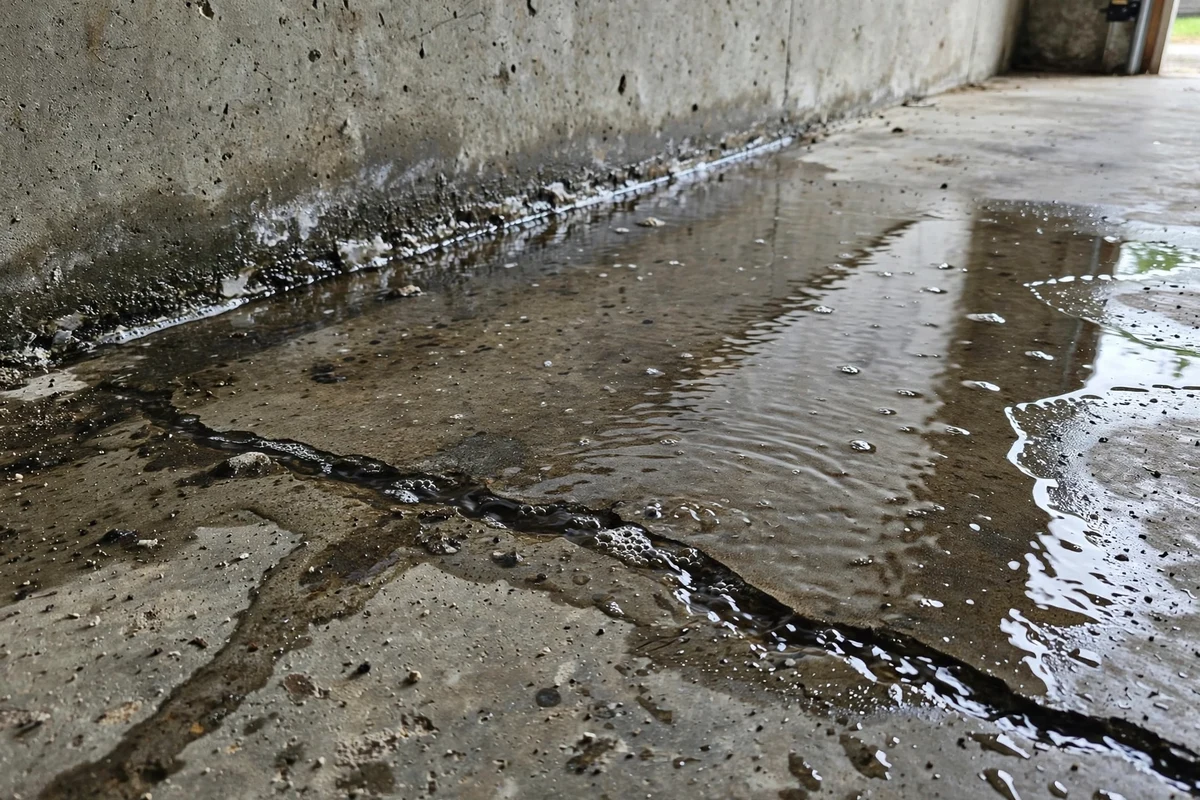
- Water pooling at the slab edge or in the garage. Water finds the path of least resistance and often surfaces where the slab meets the wall, or seeps up through cracks in garage and patio concrete.
- A water meter that keeps moving. Turn off every fixture and watch the meter. If the dial or low-flow indicator keeps spinning, a supply line is leaking somewhere, and under the slab is a prime suspect.
- Unexplained damp carpet, mildew smells, or flooring that buckles in one area with no visible source above it.
Water at the slab tells a story
Water pooling along a foundation or garage slab often means a leak beneath the concrete.
Slab water can also come from drainage or irrigation, so do not jump to conclusions, but do not ignore it either. Note exactly where the water appears, whether it is warm, and whether your meter moves with fixtures off. Those three details tell us a great deal before we ever roll a truck.
When the signs point below the foundation, our slab leak repair service pinpoints the leak through the concrete with acoustic and thermal detection, no exploratory demolition. The U.S. EPA’s WaterSense guidance on detecting household leaks explains the meter test in more detail, and the City of Lakewood site carries local water service and plumbing permit information.
Burst pipe vs. slab leak: quick comparison
When you are unsure, run through this comparison:
Speed of onset
Burst pipe: sudden, minutes. Slab leak: gradual, symptoms build over days or weeks.
Where the water shows
Burst pipe: floors, walls, ceilings, inside the living space. Slab leak: at the slab edge, in the garage, under flooring, or as a warm spot.
What you hear
Burst pipe: loud rushing or spraying behind walls. Slab leak: faint hissing or flow under the floor with everything off.
What your meter says
Both will spin a water meter with fixtures off, the meter test confirms a supply leak either way, but not which kind.
First action
Burst pipe: shut off the main valve immediately. Slab leak: shut off the main valve too, it stops the water while you arrange detection.
Who to call
Burst pipe: emergency repair, right now. Slab leak: slab leak repair with electronic detection, urgent, but measured.
Three quick checks you can do right now
You do not need tools or training for any of these:
The meter test
Turn off every fixture and appliance that uses water. Watch the meter for two minutes. Movement means a supply line is leaking.
The quiet listen
With everything off, press your ear to walls near plumbing and to the floor in suspect rooms. Rushing behind a wall suggests a burst line; hissing under the floor suggests a slab leak.
The warm-floor walk
Walk barefoot across suspect flooring, especially tile or concrete. A distinct warm patch over an otherwise cool floor is a strong slab-leak indicator.
The valve check
Shut off the main valve and see whether the symptom stops. If running water sounds or pooling stop, the leak is on your supply side, which both burst pipes and slab leaks are.
Then call Lakewood Pipe Rescue at (562) 245-5416 and describe what you found. Whether it turns out to be a burst pipe or a slab leak, we will confirm it with detection equipment and fix it, not guess at it.
Frequently asked questions
How to tell which leak you are dealing with.
Is a slab leak the same as a burst pipe under the house?
No. A burst pipe is a sudden failure of a pressurized supply line, in a wall, ceiling, or yard, that releases a lot of water fast. A slab leak is a leak in the water lines that run under or through your concrete foundation slab. It often starts slow and hides until the symptoms show up in the floor above.
Can a slab leak happen suddenly like a burst pipe?
Slab leaks usually develop slowly from corrosion or wear, but the symptoms can appear suddenly, a warm spot, a new puddle, or the sound of water under the floor. Either way, call for professional detection rather than guessing.
How do plumbers find a slab leak without tearing up the floor?
With acoustic listening equipment and thermal imaging, which pinpoint the leak’s location through the slab. That keeps any opening small and precise.
Which causes more damage, a burst pipe or a slab leak?
It depends on how long each one runs. A burst pipe can flood rooms in minutes, while a slab leak can quietly soak the foundation and flooring for weeks before anyone notices. Both deserve fast professional attention, the longer either runs, the bigger the repair.
I see water pooling near my garage slab. What should I do first?
Keep people and anything electrical away from the water, then check whether your water meter keeps moving with all fixtures off, that points to a supply-line leak. Call us at (562) 245-5416 and describe what you see; we will confirm whether it is a slab leak or a burst line and get the right help to you.
People Also Ask
Can a slab leak crack my foundation?
A long-running slab leak can erode soil beneath the concrete and leave voids that let sections settle unevenly, which may show up as cracks in floors, walls, or the foundation itself. Not every slab leak causes structural damage, but the longer water runs underneath, the greater the risk, so early detection matters.
Can a slab leak raise my water bill without any visible water?
Yes. A leak under the slab can run for weeks while the only clue is a water bill that climbs for no clear reason. Because the water escapes beneath concrete, it may never surface inside the home. If your usage jumps while your habits stay the same, check the meter with every fixture off.
Should I turn off the water if I suspect a slab leak?
If you strongly suspect a slab leak, shutting off the main valve stops further water from escaping under the foundation while you arrange a detection visit. It is a sensible short-term step, not a repair. Note where the water appeared and whether the meter was moving, then call so the leak can be pinpointed.
Contact Lakewood Pipe Rescue
Reach out any time. We aim to answer promptly and get help moving as quickly as we can.
Call
(562) 245-5416
Emergency line, call any time.
Visit
4400 Ladoga Ave
Lakewood, CA 90713, USA
contact@burstpiperepairlakewoodca.com
We aim to reply within one business day.
Prefer to talk it through?
Call and describe what you're seeing, water where it shouldn't be, a hissing wall, a sudden pressure drop. We'll tell you the safest next step before anyone rolls a truck.
Call (562) 245-5416