What to Do Immediately When a Pipe Bursts
Water from a burst pipe spreads through a home in minutes. These are the exact steps to take, in order, the moment you discover a burst pipe in your Lakewood home.
Even a small leak deserves a fast call. Get ahead of it before a pinhole becomes a flood.
Call (562) 245-5416 Request ServiceThe first 60 seconds matter most
A burst supply pipe can push out a shocking amount of water in a very short time. The damage a burst pipe does is almost always decided in the first few minutes, not the first few hours. Here is what to do right away:
- Stop the water. Go straight to your main shut-off valve and turn it off. Every minute the supply stays open, more water enters your home.
- Stay clear of electricity near the water. If water is running across outlets, switches, or your breaker panel, do not step into it. Shut off the affected breakers from a dry spot if you can do so safely.
- Get people and pets away from sagging ceilings. A bulging, dripping ceiling can let go. Move out from under it and move anything valuable out of the splash zone.
What to do when a pipe bursts: step by step
Follow these steps in order. They cover what plumbers wish every homeowner knew before the emergency call. The U.S. EPA’s WaterSense guidance on finding and fixing household leaks covers the same first response.
Shut off the main water supply
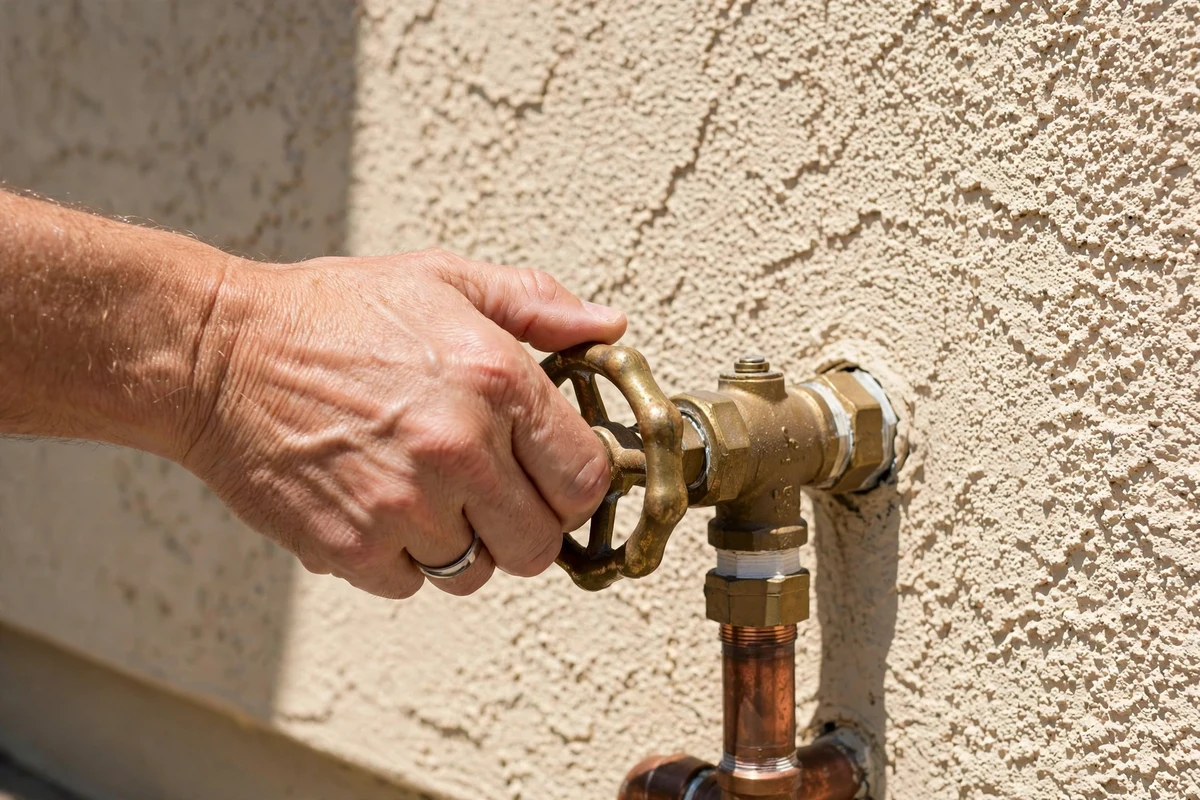
Find the valve where the water line enters your home, often near the front hose bib, in the garage, or at the meter box by the curb. Turn a round gate handle clockwise until it stops. Turn a lever-style ball valve so it sits across the pipe. If the valve is stuck, do not force it: call us and we will talk you through the meter shut-off.
Turn off power near the water
Water and electricity are a dangerous combination. From a dry spot, switch off the breakers for any room where water has reached outlets, light fixtures, or appliances. If you cannot reach the breaker panel safely, leave it alone and tell us when you call.
Open faucets to drain the lines
With the main supply off, open the cold-water faucets, lowest ones first, to drain standing water out of the lines and relieve pressure. Flush toilets once each to clear their tanks. This slows any remaining flow from the break.
Move valuables out of the way
Move rugs, electronics, furniture, documents, and anything sentimental away from the wet area. Pull furniture legs off soaked carpet where you can. What water never touches costs nothing to dry out.
Document the damage
Take photos and a short video of the burst area, the water spread, and anything damaged before you start cleaning up. Photograph the pipe itself if you can see it. This record helps enormously if you file a homeowner's insurance claim later.
Contain the standing water
Use towels, mops, buckets, or a wet-dry vacuum to pull up standing water. Crack open windows and run fans if the weather allows, airflow matters. Do not use your regular vacuum cleaner on standing water, and do not run electrical equipment while standing in it.
Call Lakewood Pipe Rescue
Call (562) 245-5416. Tell us where the water is, whether you shut off the main valve, and whether water has reached anything electrical. Our burst pipe repair team in Lakewood will find the break with acoustic and thermal detection, repair the line, and pressure-test it before we leave.
Where is your main shut-off valve?
In a calm moment, ideally today, walk your home and find it. In Lakewood homes it is usually one of these places:
- On the front exterior wall, near the hose bib closest to the street, where the service line enters the house.
- Inside the garage, on the wall facing the street, sometimes behind storage.
- In a crawlspace or access panel, in homes with raised foundations.
- At the water meter box by the curb, as a last resort. The meter valve usually needs a meter key or wrench, and some water providers ask you to call them rather than turning it yourself.
Once you find your valve, turn it off and back on once to make sure it still moves. Valves that sit untouched for years seize up, and a stuck valve in an emergency is a real problem. If yours will not turn, ask us about installing an emergency shut-off valve you can reach and operate easily.
What not to do when a pipe bursts
Panic makes people do risky things. A short list of what to avoid: Ready.gov’s federal emergency preparedness guidance covers the same stay-safe basics for homeowners.
- Do not wade through water that may be electrified. If you cannot see the floor, or water has reached outlets and cords, stay out until the power is off.
- Do not wait until morning. A burst pipe does not slow down on its own. Waiting turns a repair job into a restoration job.
- Do not try to weld or solder the pipe yourself. Torches near wet framing and insulation start fires. Temporary tape or clamps can slow a drip, but they are not a repair.
- Do not ignore a "small" leak. A pinhole spray today is a burst seam next month, especially in older corroded lines. Call for burst pipe leak detection while it is still small.
- Do not throw away damaged items before photographing them. Your insurance documentation depends on proof of what was lost.
Do a two-minute valve drill this week
The homeowners who handle burst pipes best are the ones who already knew where their valve was.
Walk every adult in the house to the main shut-off valve and show them how it turns. Label it with a tag so a guest or housesitter could find it. Then check the valve actually works, a quarter-turn each way is enough to confirm it is not seized. The City of Lakewood site carries local water service and emergency information.
If your valve is buried behind storage, rusted solid, or all the way out at the meter, consider having an accessible emergency shut-off valve installed in a spot you can reach in seconds. It is a small job that proves its worth the first time you need it.
Frequently asked questions
Straight answers for the minutes after a pipe bursts.
How do I shut off the water to my whole house?
Find the main shut-off valve where the water line enters your home, usually near the front hose bib, in the garage, or at the meter box by the curb. Turn a round gate handle clockwise until it stops; turn a lever-style ball valve so it sits across the pipe. If the valve will not budge, do not force it, call us at (562) 245-5416 and we will talk you through the meter shut-off.
Should I turn off the electricity if a pipe bursts?
Only the circuits near the water. If water is running across outlets, light switches, or the breaker panel, stay out of the water and shut off the affected breakers from a dry spot. If you cannot reach the panel safely, leave it alone and tell us when you call, we will tell you what to do first.
Can I just catch the water in buckets and wait until morning?
Do not wait. A burst pipe keeps pushing water through the break until the supply is shut off, and water soaks into drywall, flooring, and framing by the minute. The longer it runs, the bigger the repair. Shut off the water and call for emergency burst pipe repair right away.
Will you have to tear open my walls to fix a burst pipe?
Usually only a small opening is needed. We use acoustic and thermal detection to pinpoint the break first, so any opening stays as small as possible. After the repair, we patch the opening back.
What should I tell you when I call about a burst pipe?
Tell us where the water is, when it started, whether you shut off the main valve, and whether water has reached anything electrical. That lets us dispatch correctly and talk you through any steps you still need to take before we arrive.
People Also Ask
Should I call a plumber before or after shutting off the water?
Shut the water off first, then call. Every minute the supply stays open, more water enters the home, and no plumber can stop that flow by phone. Once the main valve is closed, call with the details: where the water is, whether you shut the valve, and whether water reached anything electrical.
Can I use the water again after a burst pipe is repaired?
Usually yes, once the repair is pressure-tested and the line is flushed. Run the taps briefly to clear air and any discolored water, and check the repaired section for drips over the next day. If pressure seems off or water stays discolored, call back rather than ignoring it, since a second weak spot may need attention.
How do I dry out a room after a burst pipe?
Start once the water is off and the leak is contained. Remove standing water with towels, mops, or a wet-dry vacuum, then run fans and open windows when weather allows. Lift rugs and move furniture off wet flooring. If drywall or flooring stays damp for more than a day, ask a professional about moisture before mold gets a foothold.
Contact Lakewood Pipe Rescue
Reach out any time. We aim to answer promptly and get help moving as quickly as we can.
Call
(562) 245-5416
Emergency line, call any time.
Visit
4400 Ladoga Ave
Lakewood, CA 90713, USA
contact@burstpiperepairlakewoodca.com
We aim to reply within one business day.
Prefer to talk it through?
Call and describe what you're seeing, water where it shouldn't be, a hissing wall, a sudden pressure drop. We'll tell you the safest next step before anyone rolls a truck.
Call (562) 245-5416