Our Pipe Repair Services
Nine services for Lakewood-area homes, from finding a hidden leak to replacing a worn-out system. Start with the problem you are seeing, and each page explains what happens next.
Start with what you are seeing
Most pipe problems announce themselves the same way: water where it should not be, a sound with no source, or a bill that jumped for no clear reason. The service you need depends on which of those you have, and on what kind of pipe is failing.
A damp patch that never dries and a hiss behind drywall usually mean a hidden leak, which is where burst pipe leak detection comes in: find it first, open second. A visible split or a spraying joint is a repair job, copper or otherwise, and the repair page for that material walks through the method. And when the same house keeps springing leaks in new places, the honest answer is often not another patch but a whole-house repipe, replacing the failing system instead of chasing it room by room.
The nine cards below cover the full set. Every one links to its own page with the detail behind it: what the job involves, when it is the right call, and what to expect while the work is under way. If you are unsure which card fits, call (562) 245-5416 and describe what you are seeing; that is the fastest way to the right page.
Know your shut-off valve
The single most useful thing a homeowner can know is where the main water valve is, and whether it turns.
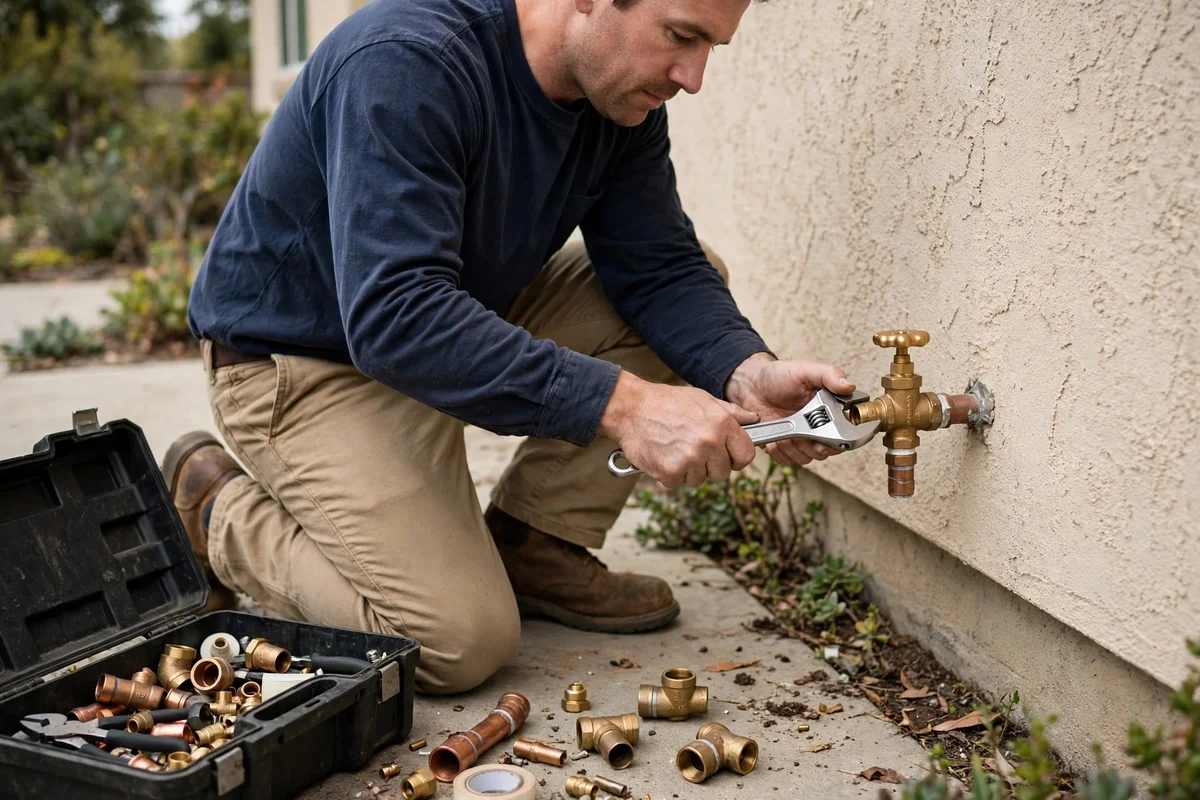
In Lakewood-area homes the valve is often at the front of the house, near the hose bib, or in a ground-level box by the curb. Older gate valves seize up after years without use, which is why a burst at midnight turns into a flood while someone hunts for a wrench. A working quarter-turn valve changes that completely: one handle, one motion, water stopped.
If your valve is stuck, stiff, or you have never found it at all, our emergency shut-off valve installation page explains the replacement. And if pressure at your taps runs high enough to rattle pipes or wear out fixture valves early, the water pressure regulator installation page covers bringing street pressure down to a safer level. Both are small jobs that prevent large ones.
Every service, in one place
Each card below is a doorway to the full service page, with the method, the warning signs, and the questions homeowners ask most.
Burst Pipe Leak Detection
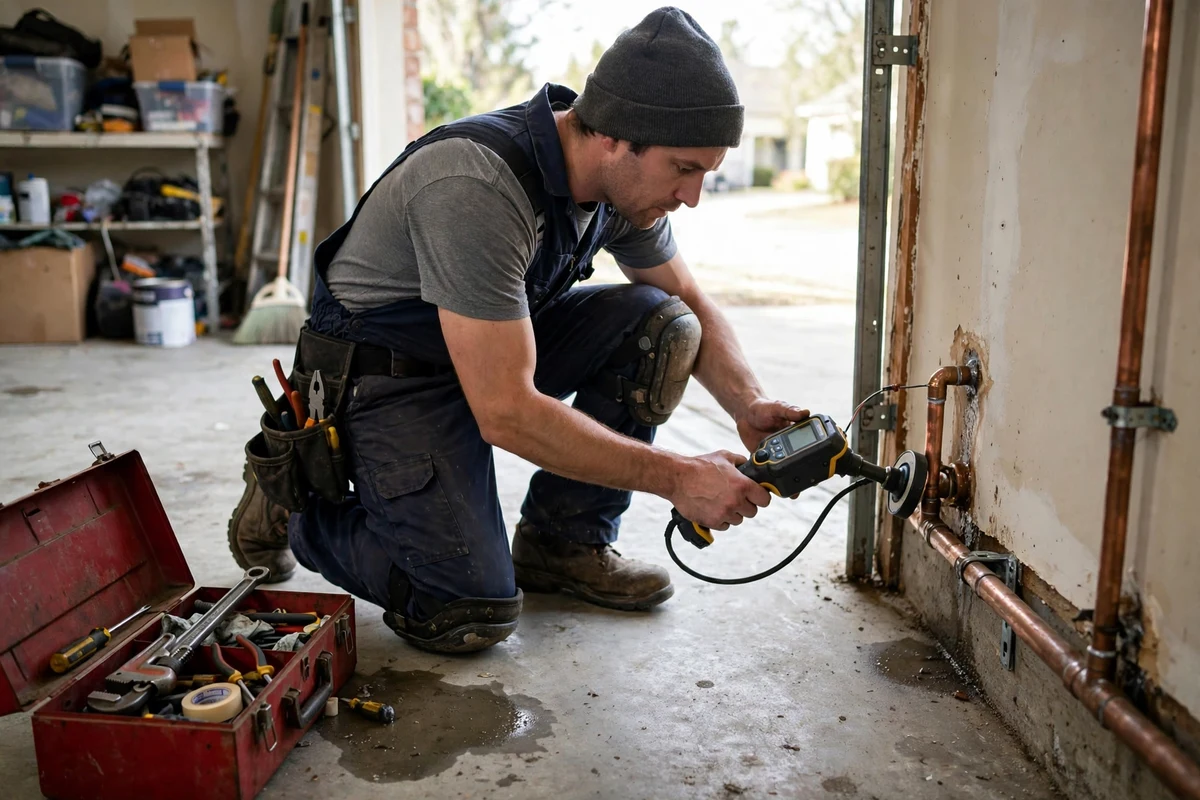
Water you can hear or see but cannot place: we trace it with acoustic and thermal readings before anything is opened, so the repair stays small.
Learn more →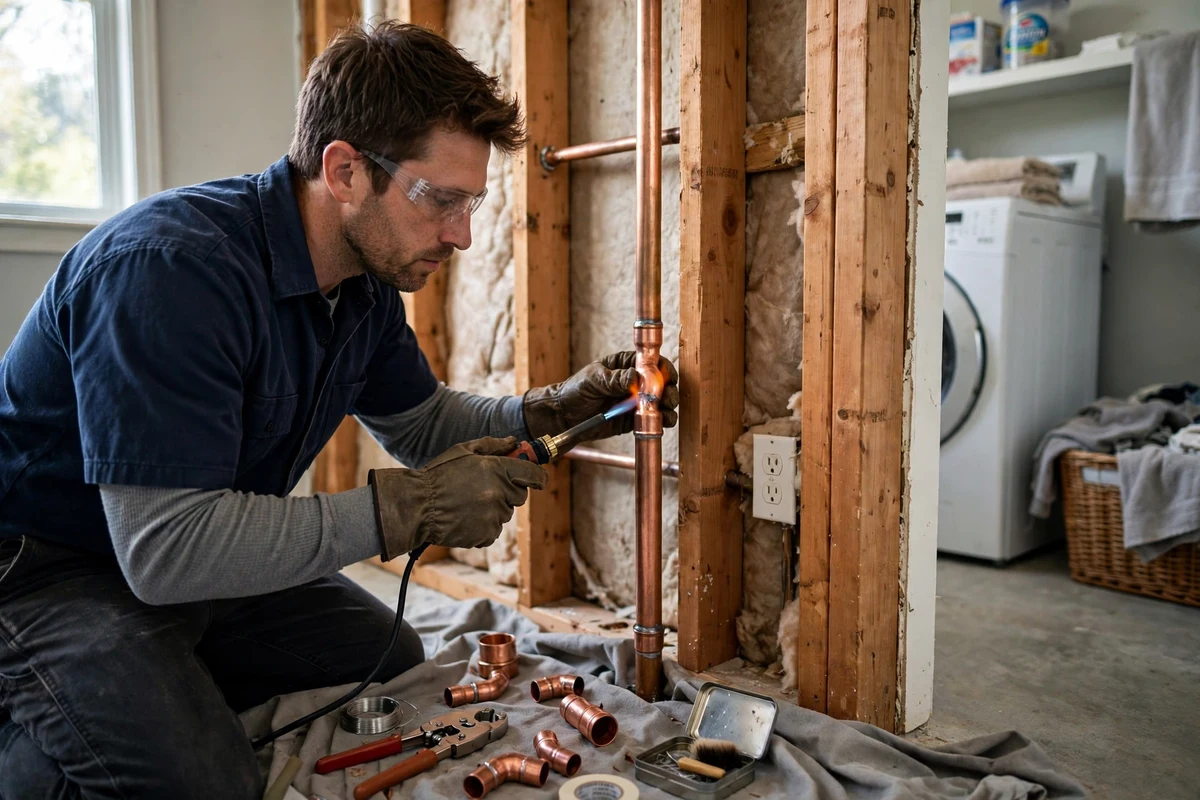
Copper Pipe Repair
Pinhole leaks, green corrosion crust, and split copper runs: failed sections come out and sound copper goes in, pressure-tested before the wall closes.
Learn more →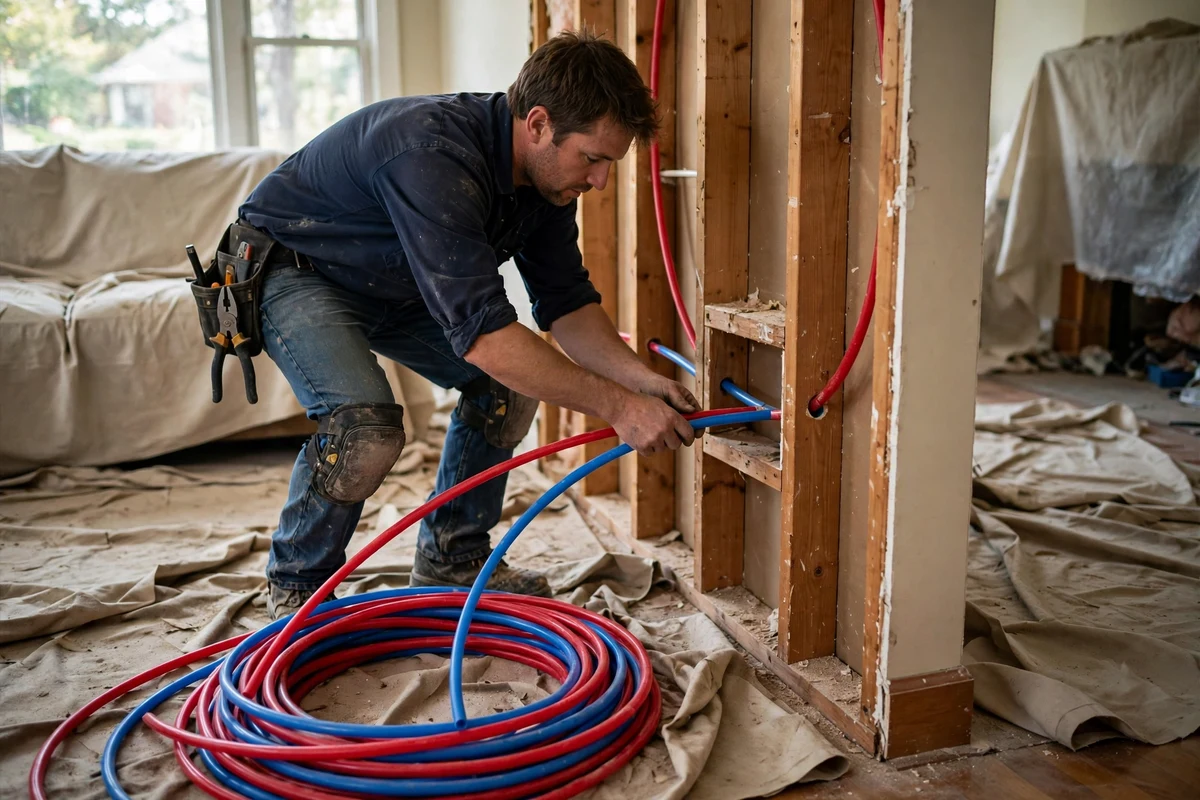
Whole-House Repiping
When leaks keep returning in different rooms, the system itself is failing. A full repipe replaces aging lines with new pipe throughout the home.
Learn more →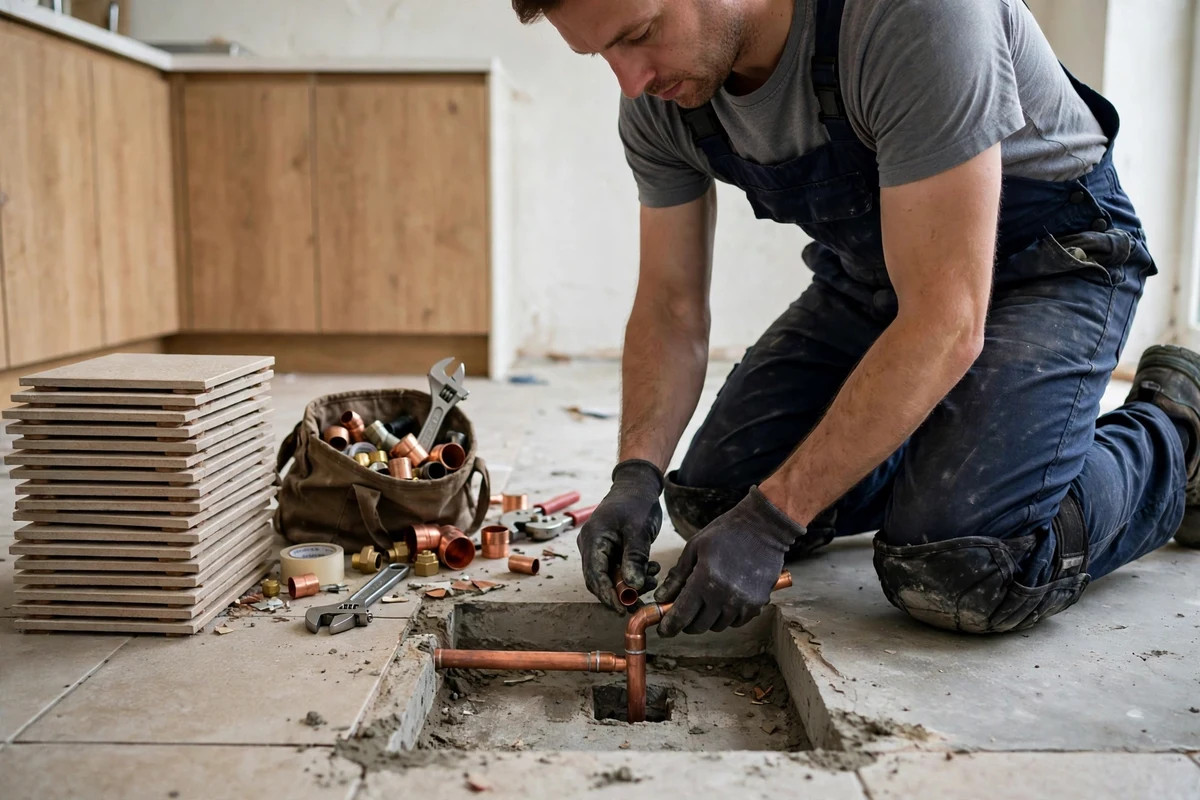
Slab Leak Repair
Warm spots on the floor, the sound of running water with everything off, a bill that climbed for no reason: we pinpoint slab leaks and repair or reroute the line.
Learn more →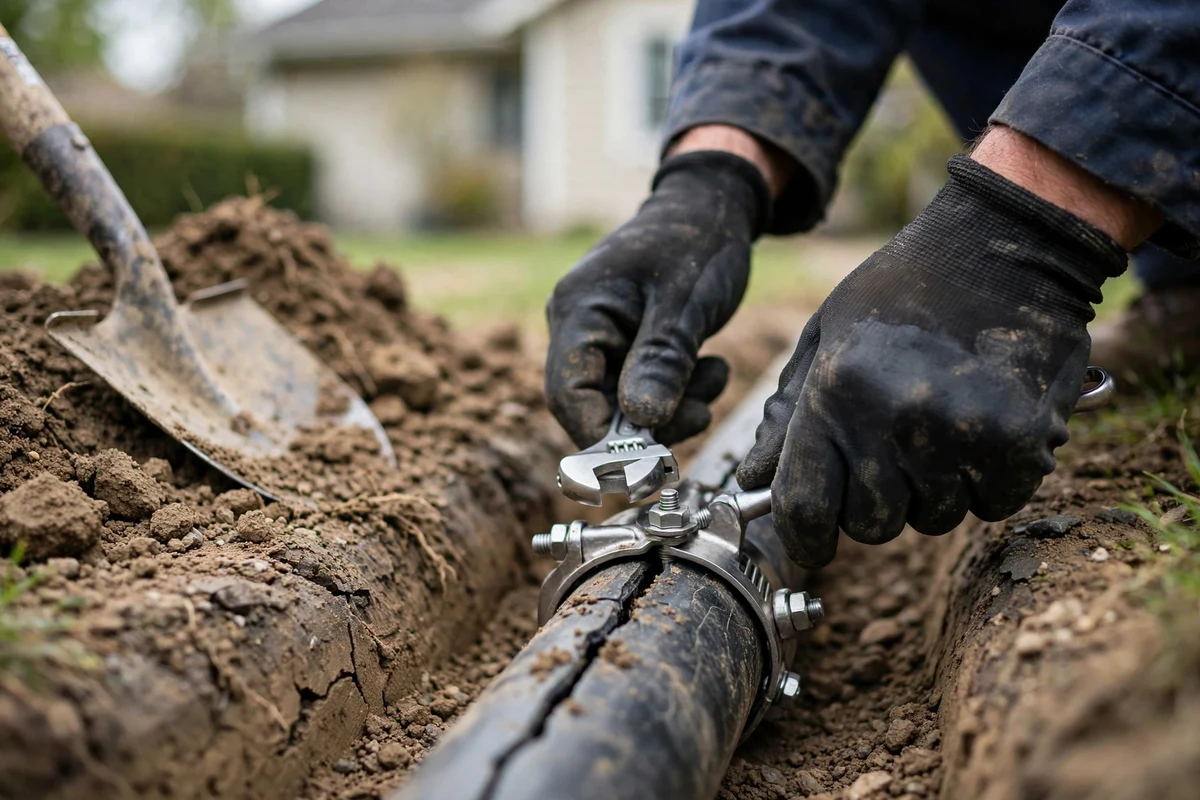
Water Line Repair
One break in the line from the street to the house: we find it, expose it, and repair the failed section, then restore the ground over it.
Learn more →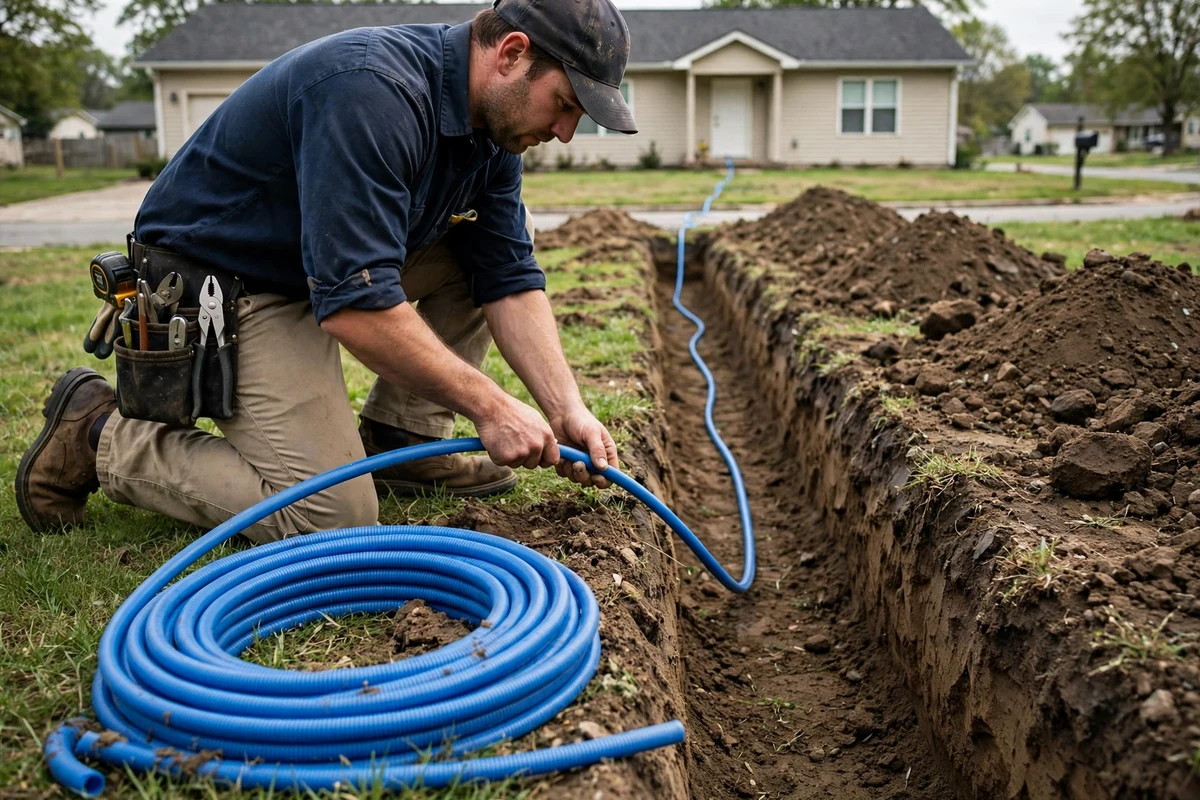
Water Line Replacement
When the service line has failed more than once or is worn along its length, replacing the whole run ends the cycle of repeat digs and repeat breaks.
Learn more →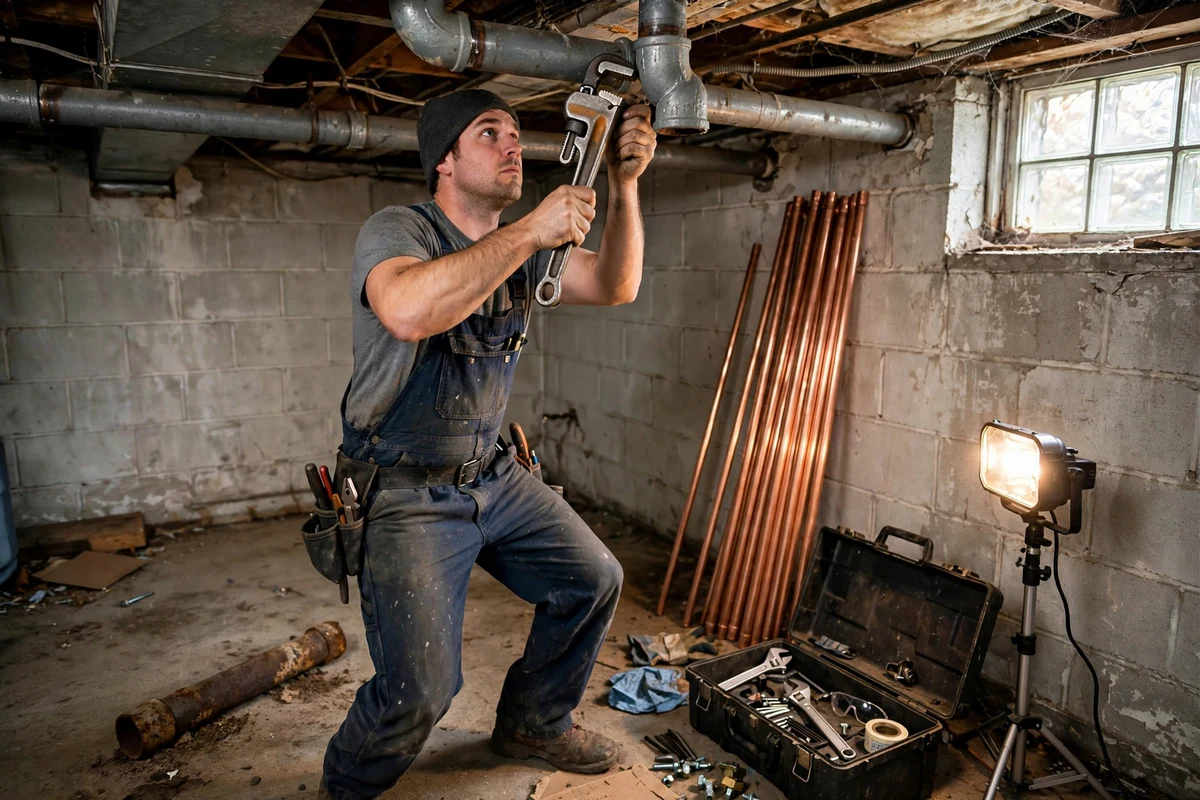
Galvanized Pipe Replacement
Galvanized steel rusts from the inside out, choking flow and then bursting. We swap corroded runs for copper or PEX, branch by branch or whole-home.
Learn more →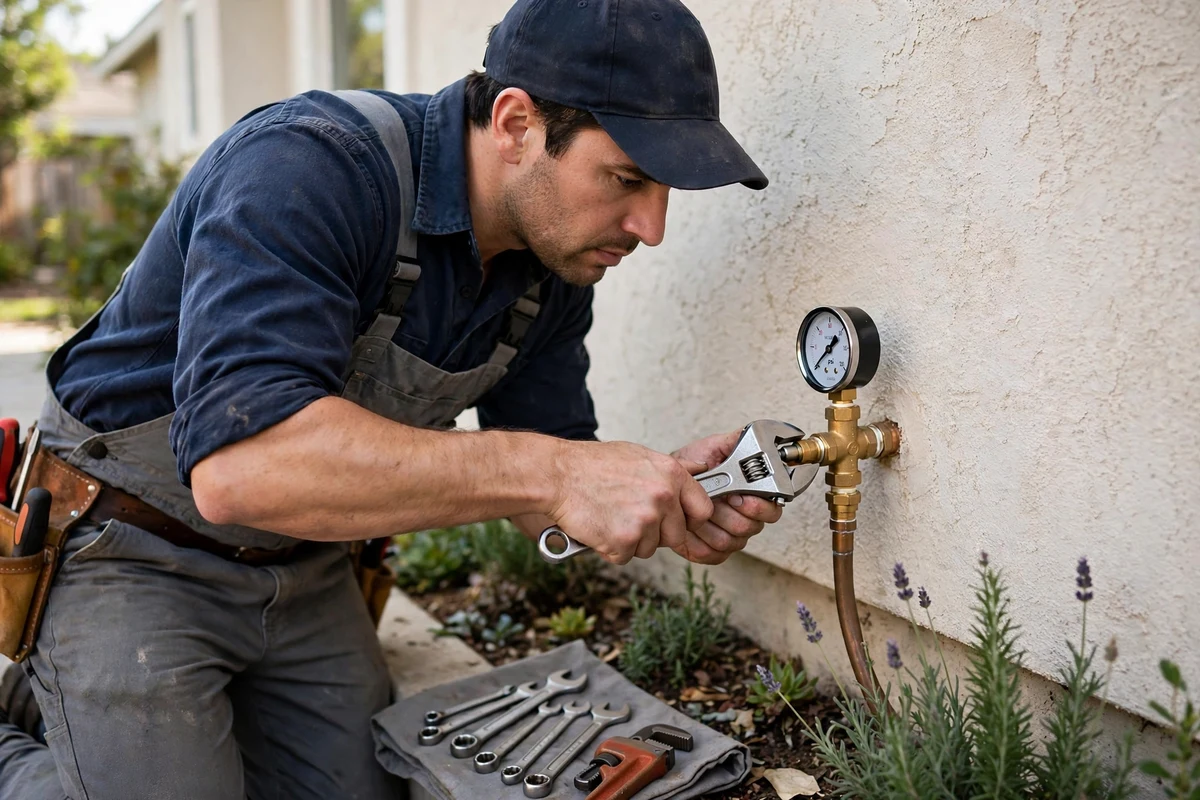
Water Pressure Regulator Installation
High street pressure hammers joints, valves, and fixtures day after day. A regulator at the main brings pressure down to a level aging pipes can live with.
Learn more →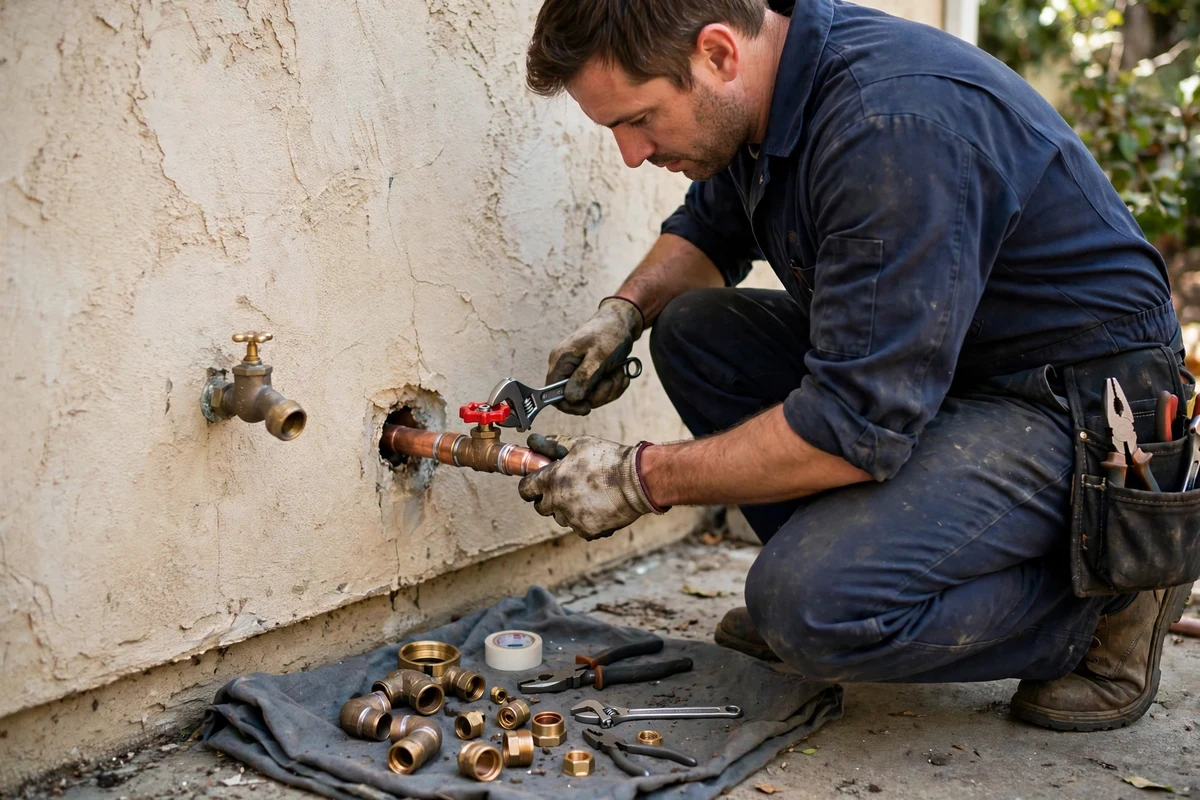
Emergency Shut-Off Valve Installation
An old gate valve that will not turn is no help in a flood. A new quarter-turn valve at the main lets anyone in the house stop the water in seconds.
Learn more →Small openings, careful patch-back
Nobody wants a ceiling opened for a leak that turns out to be three feet away. That is why detection comes before demolition on every job.
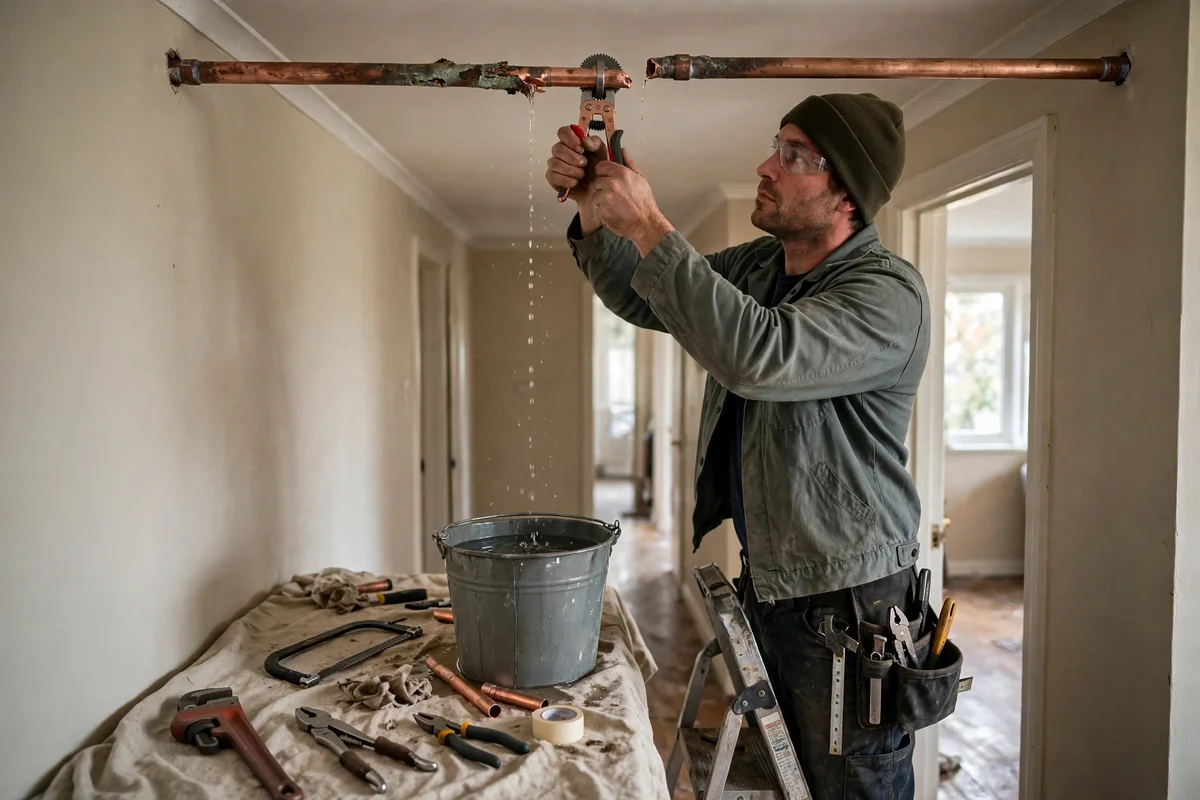
On a ceiling leak, acoustic listening and moisture readings narrow the source to a small area before any drywall is cut. The opening is sized to the repair, not to the guess, and the failed section is replaced with proper fittings and pressure-tested before anything is closed back up. The same discipline applies under a slab: pinpoint the line, repair or reroute it, and leave the floor as close to found as the job allows.
For lines in walls and ceilings, copper pipe repair and slab leak repair describe how each kind of opening is handled. For the line from the street, water line repair and water line replacement cover the trench work and the ground restored over it.
When a repair is enough, and when it is not
The hardest call in pipe work is not how to fix a break, but whether fixing this one break solves the problem.
A single failure in an otherwise healthy run is a repair, full stop. The pipe around it is sound, the joints hold, and a new section puts the system right. The picture changes when failures repeat: a second pinhole six months after the first, a new damp patch in a different room, a water line that has been dug up twice. Each repair is still sound work, but the pattern says the material is at the end of its life, not that the repairs were wrong.
That is the fork between the repair pages and the replacement pages on this hub. Galvanized pipe replacement deals with steel lines that rust from the inside and never improve with age. Water line replacement deals with a service line that has failed too often to trust. Reading both sides before deciding is the point of this page: the right job is the one that matches the condition of the pipe, not the size of the puddle.
Questions about our services
How to pick the right service, and what to do while you are deciding.
Which service should I start with if water is running right now?
Start with burst pipe leak detection. It finds the break first, so the repair that follows opens only what needs opening. If you already know where the water is coming from, call (562) 245-5416 and describe it, and we will point you to the right service page.
How do I choose between a repair and a full replacement?
It comes down to how much of the line has failed. One bad section in an otherwise sound pipe is a repair. Repeated breaks, thinning walls along a whole run, or a line that keeps failing in new spots usually means replacement makes more sense, and we will show you what we find so you can decide.
Do the services on this page cover homes outside Lakewood?
Yes. Every service listed here is available across Lakewood and the nearby cities on our service areas page, including Bellflower, Cerritos, Downey, and the other towns we serve.
What should I do before a technician arrives?
If you can, shut off the main water valve and move belongings away from the wet area. If you cannot find the valve or it will not turn, call (562) 245-5416 and we will talk you through finding it on the phone.
Can I read more about one service before calling?
Yes. Each card below links to a full page for that service, with what it involves, when it is needed, and answers to common questions about it.
Not sure which service fits? Describe what you are seeing and we will point you to the right page.
Call (562) 245-5416Water running now? Start here.
If water is moving through your home right now, shut off the main valve first, then call. If the problem is slower, a damp patch, a hiss, a climbing bill, pick the card above that matches it and read the full page before you decide.
Burst pipe leak detection → · Contact Lakewood Pipe Rescue →