Water Line Repair vs. Replacement: Which Do You Need?
A broken water line forces a choice: fix the break or replace the whole line. Here is how to think about it like a plumber, so you get the right job done once.
A failing line won’t wait. One call gets a technician heading your way.
Call (562) 245-5416 Request ServiceHow we help you choose, without the guesswork
You shouldn’t have to take our word for it. Here’s what a proper assessment looks like.
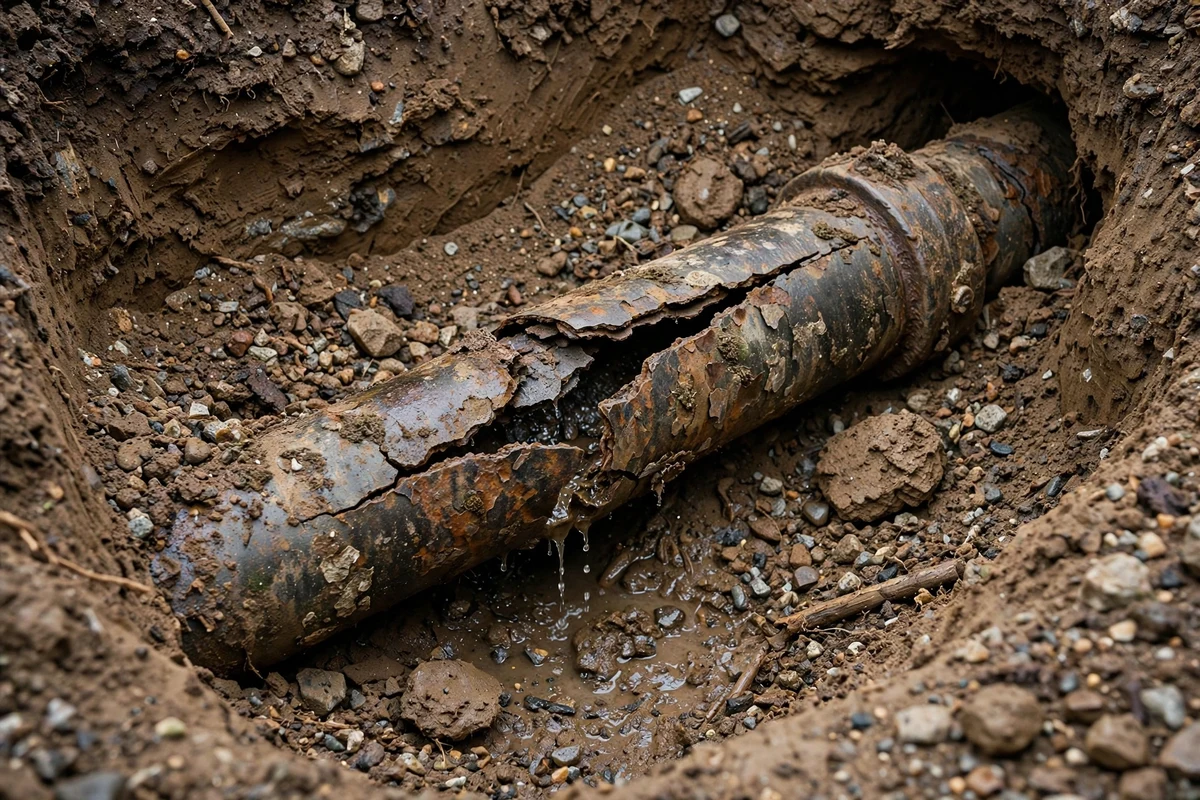
- We expose the break and look at the pipe on both sides of it, material, corrosion, and wall thickness tell us how the rest of the run is doing.
- We pressure-test the line to see whether it holds steady or bleeds down, which reveals weak spots you can’t see.
- We run a camera where it helps, so you can see the inside of your own pipe on screen, pitting, scale, and thin walls don’t need translating.
- We lay out both options plainly: what a repair fixes, what it doesn’t, and what each path costs you in disruption over the next few years.
Then you decide. A repair today with a planned replacement next year is a perfectly good answer when the budget says so, what matters is that it’s your call, made with the full picture. Whether the evidence points to a water line repair or a full water line replacement, the assessment above is what separates the two. The City of Lakewood site carries local water service boundaries and permitting information, and the U.S. EPA’s drinking-water and service line guidance covers the same ground.
Repair vs. replacement questions, answered
What Lakewood homeowners ask when the water line is the problem.
How do I know what material my water line is?
Find where the line enters your house, usually near the front hose bib or in the garage, and look at the exposed pipe. Galvanized steel is dull gray and magnetic; copper is reddish-brown; plastic is white, blue, or red. When in doubt, we identify it during the inspection.
Can you repair just part of a galvanized line?
Yes, a single break can be cut out and replaced. But if the rest of the galvanized run is corroding, that repair is a stopgap: worth doing in an emergency, worth reconsidering as a plan.
Does replacement mean tearing up my whole yard?
Not necessarily. The trench follows the line’s path, and in many yards a new line can be pulled through with minimal digging. We walk the route with you before any work starts so there are no surprises.
Will a new water line improve my water pressure?
If low pressure comes from internal corrosion choking the old line, yes, a new line restores full flow. If the problem is the city’s supply pressure or a failing regulator, a new line alone won’t fix it. We test first so you know which it is.
Should I replace the line before it breaks?
If it’s galvanized, visibly corroded, or has already broken more than once, planning a replacement on your schedule beats doing it as an emergency. An inspection tells you where you stand.
Don’t sit on a burst pipe while water spreads. Call now, describe the break, and we’ll get a technician moving to your home.
Call (562) 245-5416People Also Ask
How long does a water line replacement usually take?
Most single-home water line replacements take a day or two of digging and pipe work, with restoration of the yard following after. Trenchless methods can shorten the open-trench time, while long runs, deep lines, and hard ground add time. Your plumber should lay out the expected sequence before work starts so there are no surprises.
Can tree roots break a water line?
Tree roots are a common cause of damage to buried lines, especially older ones with joints or small cracks. Roots seek moisture and push into weak points, widening them over time until flow is blocked or the pipe splits. A camera inspection shows whether roots are part of the problem before you choose between repair and replacement.
Is a water line the same thing as a sewer line?
No. The water line brings clean water into your home from the street, while the sewer line carries wastewater away from it. They run in different trenches, use different materials, and fail in different ways. Knowing which line is damaged matters, because the repair method and the urgency are not the same for both.
Contact Lakewood Pipe Rescue
Reach out any time. We aim to answer promptly and get help moving as quickly as we can.
Call
(562) 245-5416
Emergency line, call any time.
Visit
4400 Ladoga Ave
Lakewood, CA 90713, USA
contact@burstpiperepairlakewoodca.com
We aim to reply within one business day.
Prefer to talk it through?
Call and describe what you're seeing, water where it shouldn't be, a hissing wall, a sudden pressure drop. We'll tell you the safest next step before anyone rolls a truck.