Seven Warning Signs Your Pipes Are About to Burst
Pipes almost always warn you before they fail. Here are the seven signs Lakewood homeowners should never ignore, and what to do about each one.
Wall hissing, damp spots, or pressure that keeps dropping? One call gets you a clear read on what’s wrong.
Call (562) 245-5416 Request ServicePipes rarely burst without warning
Most burst pipes are not surprises. The pipe weakens over months or years, and the house drops hints long before the failure. The catch: the hints are easy to brush off until it is too late. Here are the seven warning signs Lakewood homeowners should act on, not watch.
Sign 1: Your water pressure drops or fluctuates
A sudden, house-wide drop in water pressure can mean water is escaping from a line before it reaches your fixtures. If one faucet is slow, it is often a clogged aerator. But when pressure falls across the whole house, or swings noticeably from one day to the next, treat it as a possible developing leak.
This is especially worth acting on in Lakewood homes with original galvanized steel lines, where internal corrosion narrows the pipe and weakens the walls at the same time. A professional burst pipe leak detection visit can confirm whether pressure loss is coming from a failing line.
Sign 2: Brown or rusty water from your taps
Water that runs brown, yellow, or reddish, especially first thing in the morning, usually means corrosion inside your pipes. The discoloration comes from rust and scale breaking loose as water moves through deteriorating lines.
Occasional discoloration right after nearby water-main work usually clears after a few minutes of running the tap. But rust-colored water that keeps coming back, or that appears only on the hot side, points to corrosion in your own plumbing, and corroded pipe walls are thinner pipe walls. That is a direct step toward a burst.
Sign 3: Damp spots, stains, or peeling paint
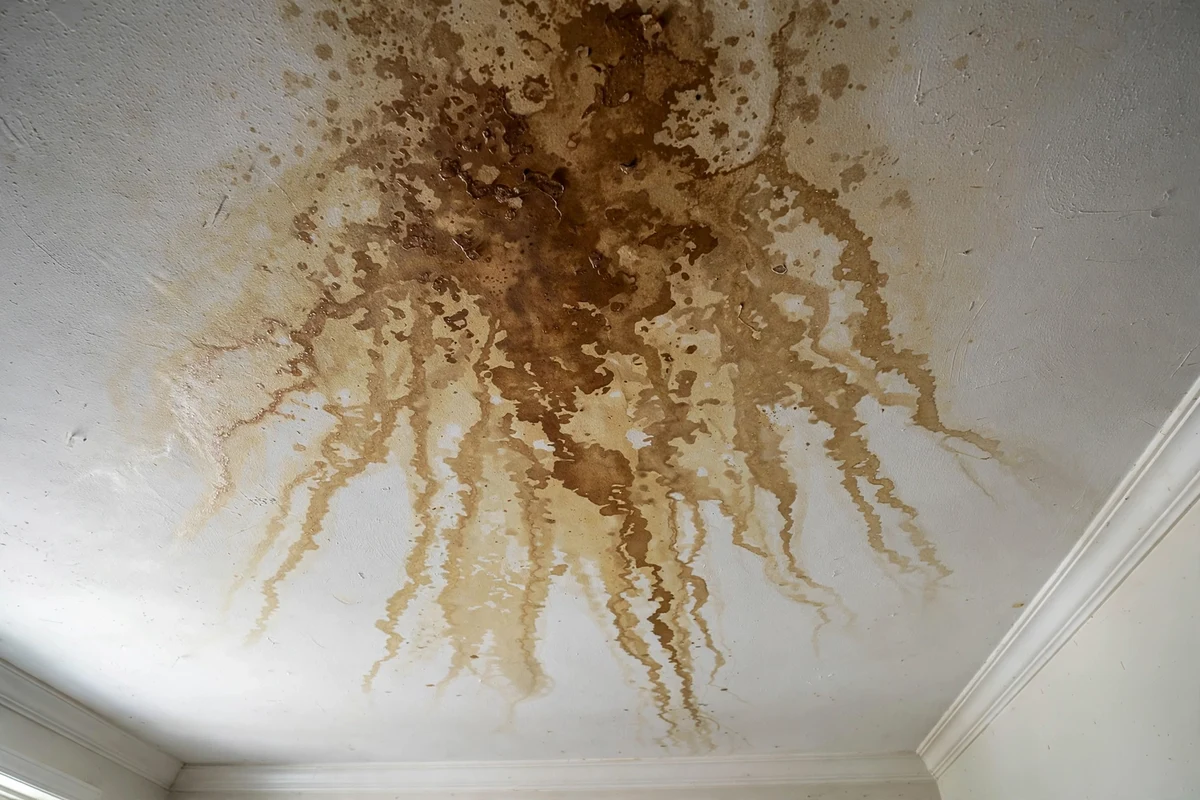
Water escaping behind a wall or under a floor leaves marks: damp patches on drywall, brownish ceiling stains, paint that bubbles or peels, baseboards that warp or pull away from the wall. These are the most visible early warnings a home gives.
Do not paint over a stain and hope for the best. Mark the edges of the spot with a pencil and check whether it grows over the next few days. If it is spreading, or if the area feels soft, call for leak detection so the source gets found before the pipe gives way completely.
Sign 4: A musty smell with no visible cause
A persistent musty or earthy odor in one room or closet often means water has been sitting where it should not be, behind drywall, under flooring, or inside a wall cavity. You cannot see the leak, but your nose can find it.
Hidden moisture like this does double damage: it feeds mold growth and it means a pipe is already leaking. Sniff around the base of walls and under sinks. If one area consistently smells damp, that is where the investigation should start.
Water stains are the leak's confession
A spreading ceiling or wall stain means water is traveling through your home's structure right now.
Stains grow outward from the entry point, so the darkest center usually sits closest to the source. Note the stain's location relative to plumbing above or nearby, a bathroom, a laundry room, or a water line running through the attic, and pass that detail to us when you call. It shortens the search considerably.
Sign 5: Your water bill climbs for no reason
When the bill rises but your household habits have not changed, water is going somewhere you cannot see. A supply-line leak can waste a large volume quietly for weeks before it bursts or surfaces.
Try the meter test: turn off every fixture in the house, then watch the water meter. If the dial or low-flow indicator keeps moving, water is flowing through a line that should be still. That is one of the clearest confirmations of a hidden leak a homeowner can get.
Sign 6: Hissing, knocking, or banging in the walls
Pipes talk. A faint hissing behind a wall when no fixture is running can be water escaping under pressure through a pinhole. Loud banging when you shut off a faucet, called water hammer, is pressure spiking through the lines and hammering every joint and weak spot along the way.
Occasional light knocking is common and not an emergency. But new, loud, or repeated banging, or a hiss that was not there before, deserves attention. High water pressure makes hammering worse, and a water pressure regulator is often part of the fix.
Sign 7: Corrosion you can see with your own eyes
Look at the exposed pipes under your sinks, at your water heater, and along the garage wall. Rust, green-white crust on copper, flaking metal, pitting, or past patches and clamps are all evidence that the pipe material is breaking down.
Corrosion almost always attacks the inside of the pipe first, so what you see on the outside is the mild version of what is happening inside. If exposed lines look rough, the hidden runs behind your walls are likely in similar or worse shape. That is the moment to plan, through galvanized pipe replacement or whole-house repiping, before a failure plans for you. The City of Lakewood site carries local water service and plumbing permit information for homes in the area.
Spotted a warning sign? Act while it is still small
Every one of these signs is cheaper and easier to handle than a burst pipe. Here is what to do:
- Do the meter test described above to confirm whether water is flowing when it should not be.
- Note exactly what you are seeing, where the stain is, which fixtures lost pressure, when the noises started. Details speed up the diagnosis.
- Call Lakewood Pipe Rescue at (562) 245-5416. Our burst pipe leak detection service pinpoints the problem line with acoustic and thermal tools, so you get answers instead of guesses.
Frequently asked questions
What homeowners ask before a small sign becomes a big flood.
Does a drop in water pressure always mean a pipe is failing?
Not always, a single slow fixture is often just a clogged aerator. But a sudden, house-wide pressure drop, especially in a home with older galvanized lines, can mean water is escaping from a developing leak. When pressure falls across the whole house, call for burst pipe leak detection before it turns into a burst.
Is brown water from my tap dangerous?
Brown or rusty water usually means corrosion inside your pipes or disturbed sediment. Occasional discoloration after nearby water-main work clears quickly, but rust-colored water that keeps coming back is a sign of deteriorating lines that need professional attention.
I hear banging when I turn off the faucet. Is that serious?
That banging is called water hammer, pressure spikes slamming through the line. Occasional light knocking is common, but loud, repeated banging in aging pipes wears out joints and weak spots. A water pressure check will tell you whether high pressure is stressing your system.
There is a damp spot on my wall but no visible leak. What should I do?
Do not ignore it. Damp spots, bubbling paint, and warped baseboards usually mean water is escaping behind the surface. Mark the edges of the spot with a pencil and watch whether it grows, then call for leak detection so the source is found before the pipe fails.
How do I know if my home’s pipes are past their prime?
In Lakewood, many homes built in the early 1950s still have original galvanized steel or older copper lines. Visible rust, pitting, flaking, or old patches on exposed pipes in the garage or under sinks tell you the system is aging. An inspection will show how much life is left and whether replacement or repiping makes sense.
People Also Ask
Can a warning sign disappear on its own?
Almost never. A damp patch may dry in warm weather and pressure may seem normal for a while, but the underlying weakness in the pipe remains and keeps getting worse. Warning signs that come and go are still warnings. If a symptom has appeared once, have the line checked rather than waiting for it to return louder.
Which warning sign should I act on first?
Act first on active water: visible pooling, a spreading stain, or a sudden pressure drop, because those mean water is escaping right now. Odors, noises, and discolored water come next, since they point to a leak that is already underway. In practice, any single sign is enough reason to call for a check.
Should I shut off the water if I notice several warning signs at once?
If several signs appear together, such as a damp wall, falling pressure, and a rising bill, shutting off the main valve is a reasonable precaution until a plumber can inspect. It stops further damage while you arrange the visit. If only one mild sign is present, a prompt inspection is usually enough without shutting the whole house off.
Contact Lakewood Pipe Rescue
Reach out any time. We aim to answer promptly and get help moving as quickly as we can.
Call
(562) 245-5416
Emergency line, call any time.
Visit
4400 Ladoga Ave
Lakewood, CA 90713, USA
contact@burstpiperepairlakewoodca.com
We aim to reply within one business day.
Prefer to talk it through?
Call and describe what you're seeing, water where it shouldn't be, a hissing wall, a sudden pressure drop. We'll tell you the safest next step before anyone rolls a truck.
Call (562) 245-5416